At a Glance
$5,000
Starting Price
4-8
Months Build Time
Franklin, TN
Nashville Area
- Starting Price
- $5,000 USD
- Build Time
- 4 to 8 months
- Location
- Franklin, Tennessee, Nashville area
- Guitar Models
- OM12, OM14, and Dreadnought
- Contact Email
- raymondguitars@gmail.com
Meet Paul Raymond
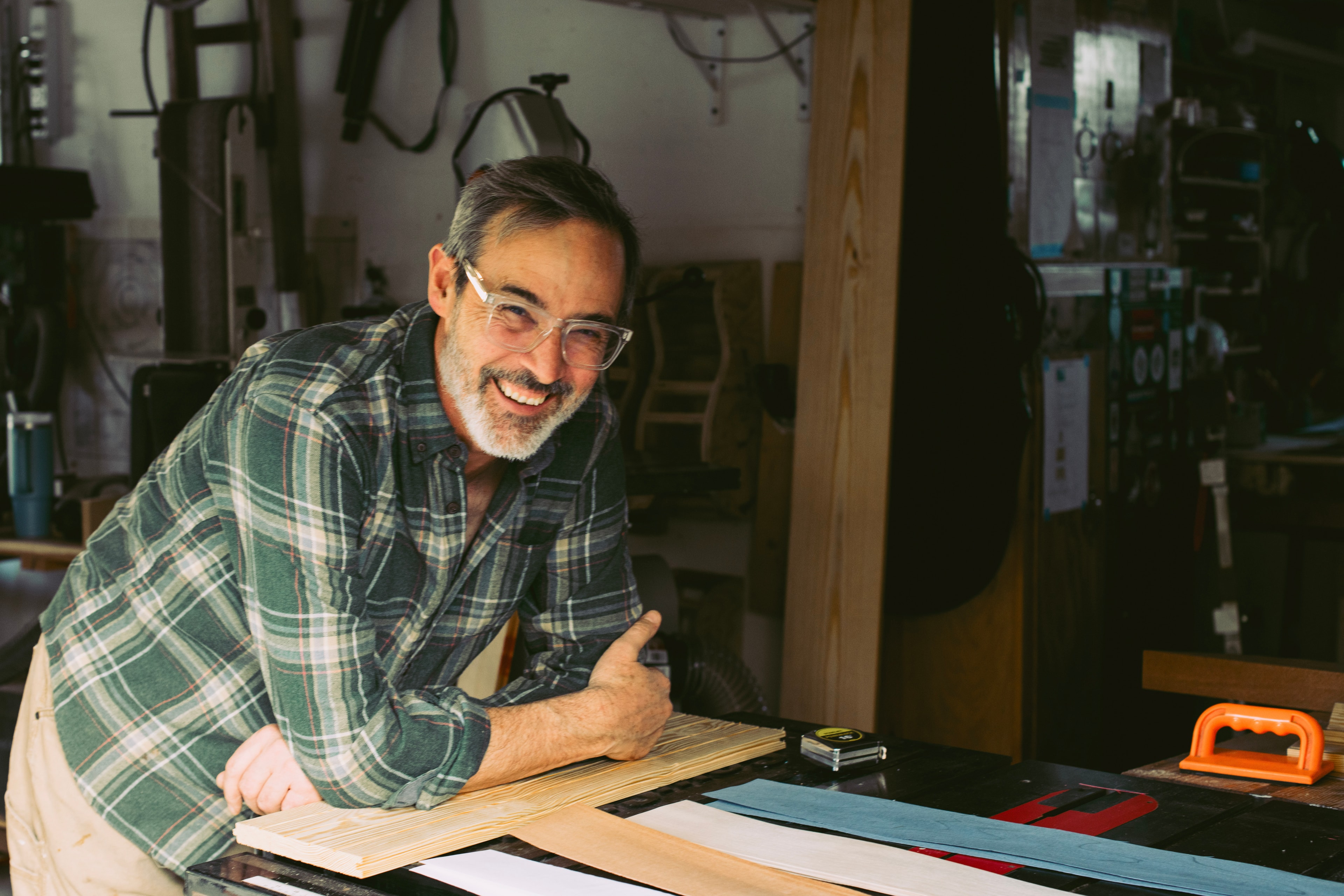
Meet Paul Raymond
The Early Spark
As long as I can remember, I’ve been drawn to making things with my own hands, especially from wood. I was fortunate to grow up spending time in my neighbor’s woodshop, where I built my first guitar. I cut it out on a bandsaw from wood salvaged from an old piece of furniture, maybe a coffee table, though I can’t remember for sure. It was a rough take on what I would later learn was a Gibson Explorer. I strung it with wire, and although it wasn’t a real instrument, my brother and I thought it was pretty cool.
Honing the Craft
Over the years, I kept building and eventually set up my own woodshop, where I made jewelry boxes and furniture. But music was always a part of me, and the memory of that old cutout Explorer never faded.
The Philosophy Today
Several years ago, I took a course in guitar building, and ever since, I’ve been working to perfect my skills in the art and craft of luthiery. I believe guitars, especially acoustic guitars, are magical creations that can transport both player and listener to realms unknown. Music is a gift, and it speaks for us when words can’t. A handmade guitar is something truly special: the care that goes into it, the design choices, the individuality. It’s an instrument a player can bond with in a way that’s hard to replicate with something store-bought.
If you’ve never played a handmade instrument, you owe it to yourself to give one a try. I’d be honored to make one for you. Take a look around this site, and let’s start building together.
See What Others Are Saying
Guitar educator Matt Franceschini visited the workshop to see firsthand how Raymond guitars come to life.
“The Best Guitar Builder You've Never Heard Of”
Matt Franceschini, a guitar educator with over 13,000 YouTube subscribers, explores the craftsmanship behind Raymond Guitars. From tonewood selection to the final setup, see what goes into building a traditionally modern acoustic guitar.
Matt Franceschini
Guitar Educator & YouTube Creator
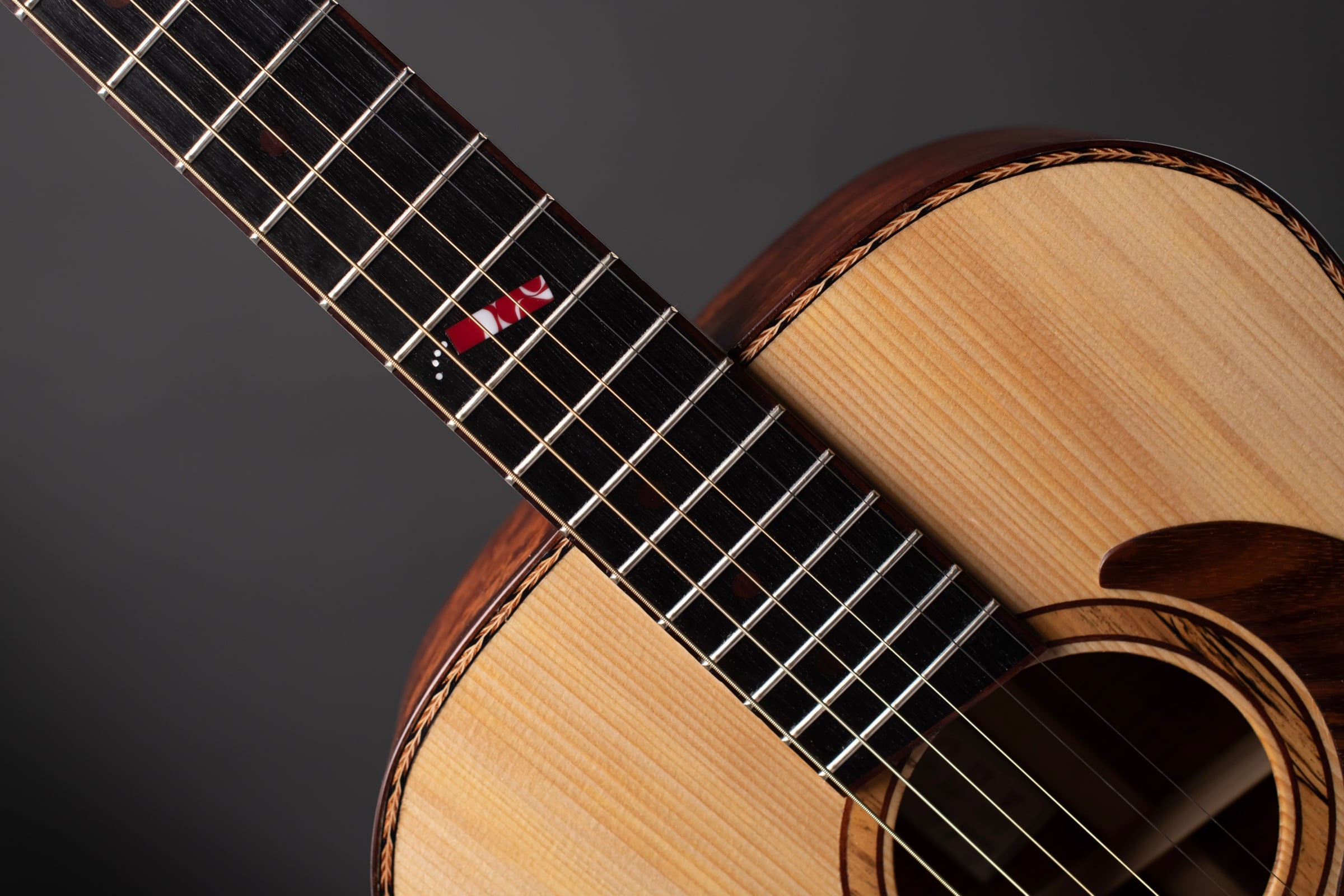
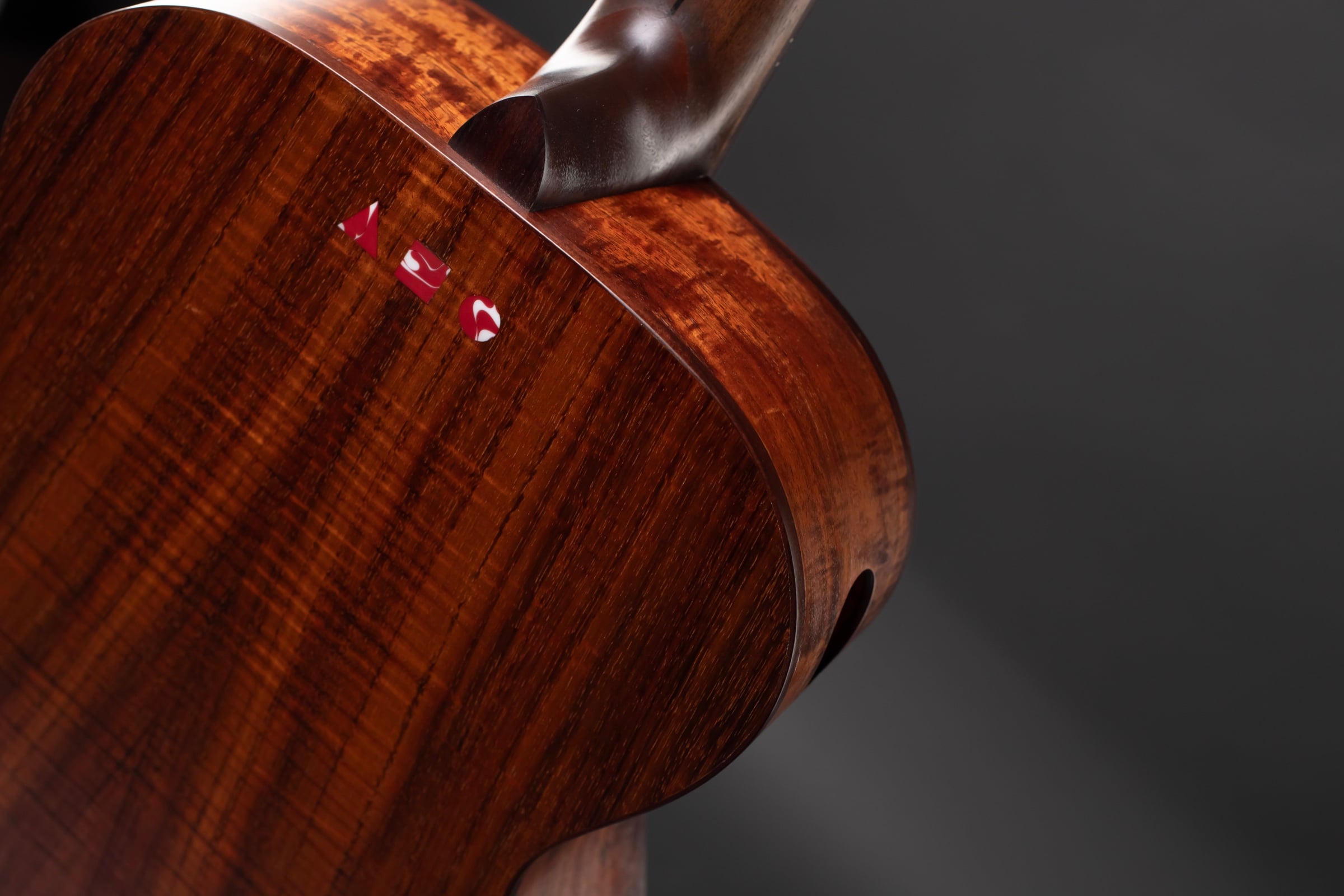
Why the circle, square, and triangle?
For starters, they remind me to keep things simple. These shapes are reminiscent of the building blocks I had as a kid, and I like the idea of play being part of my work. They remind me that great things can come from simple beginnings, and that the kid in me is still there. On a deeper level, they represent the 1st, 3rd, and 5th notes of a musical scale, and they can be arranged in any order and still look good. That flexibility mirrors the nature of chord inversions. Nothing like a little music theory in my woodworking!
What does “traditionally modern” mean?
To me, it starts with simplicity. The “traditional” part refers to the X-braced guitar, a tried-and-true method of building the American-style steel-string. It’s a proven approach and, let’s face it, it produces the sound most of us imagine when we think of an acoustic guitar. I use hot hide glue on all the parts attached to the soundboard. Hot hide glue is an ancient adhesive that bonds wood better than standard wood glue and makes future repairs easier.
The “modern” part comes from unique design choices and innovations that help the guitar play and sound its best. Carbon-fiber reinforced necks, sound ports, and a few carefully considered brace tweaks create a guitar that is responsive, balanced, and a joy both to play and to hear.